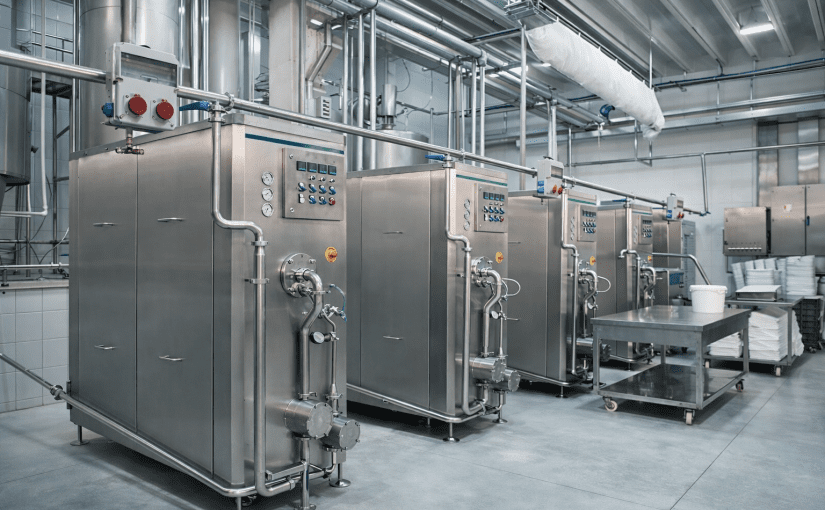
How is large-scale frozen dessert made consistently safe, smooth, and profitable? The answer lies in a carefully controlled, multi-stage workflow designed for volume, hygiene, and repeatability. In modern facilities, the ice cream manufacturing process integrates food science with automation to deliver uniform taste and texture at scale. This guide explains each stage clearly, helping decision-makers understand how industrial systems work from ingredient intake to cold storage—without sales language or unnecessary complexity.
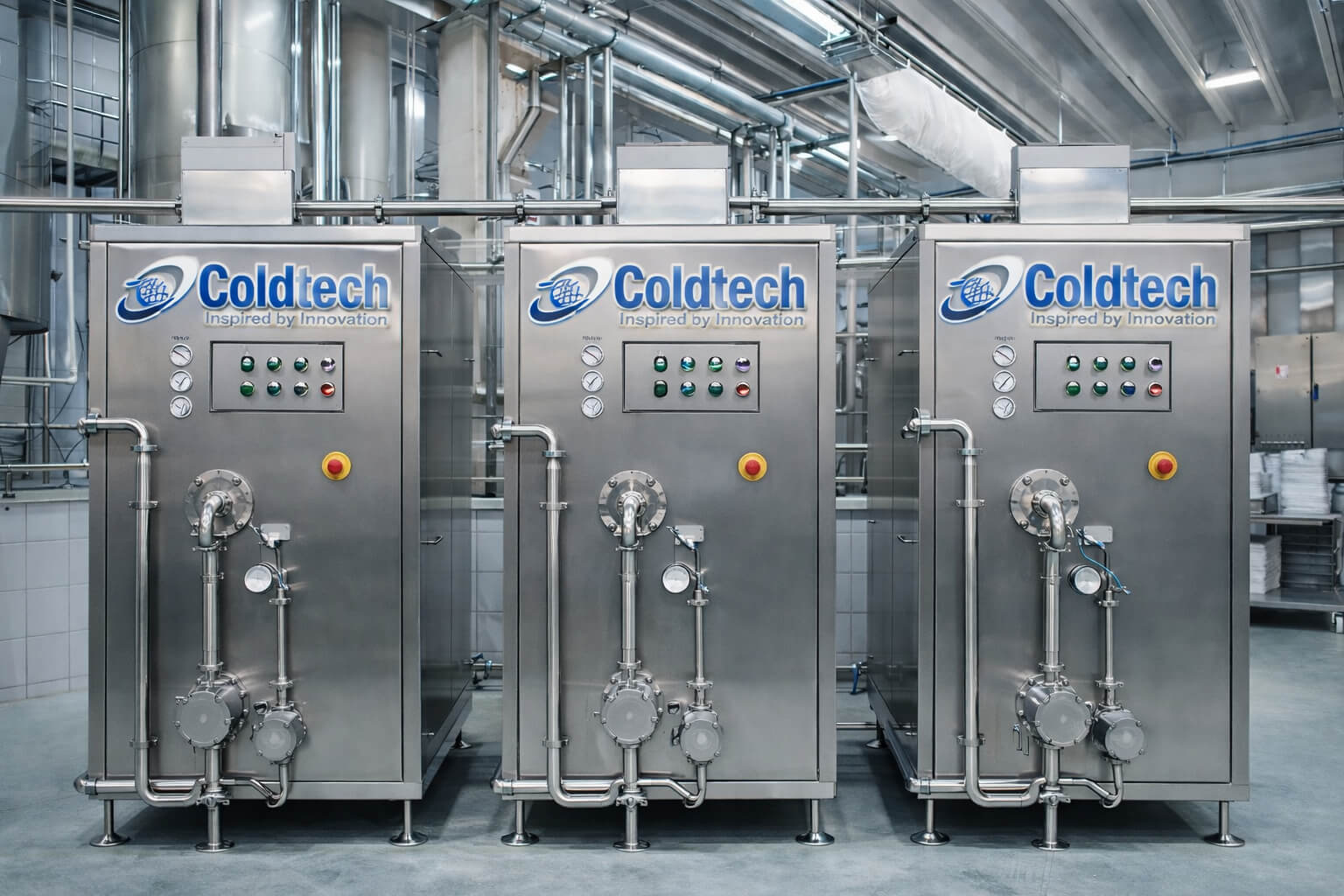
What Is the Industrial Ice Cream Manufacturing Process
The large-scale workflow refers to a standardized sequence of operations that transforms raw ingredients into packaged, frozen products ready for distribution. Unlike small-batch methods, this approach emphasizes control points, automation, and compliance with food safety standards.
The objective is simple: maintain product quality while achieving high throughput. Each step is engineered to minimize contamination risks, reduce manual handling, and ensure consistency across batches. Temperature control, timing, and mechanical precision are critical throughout the cycle.
Raw Material Preparation in Ice Cream Plants
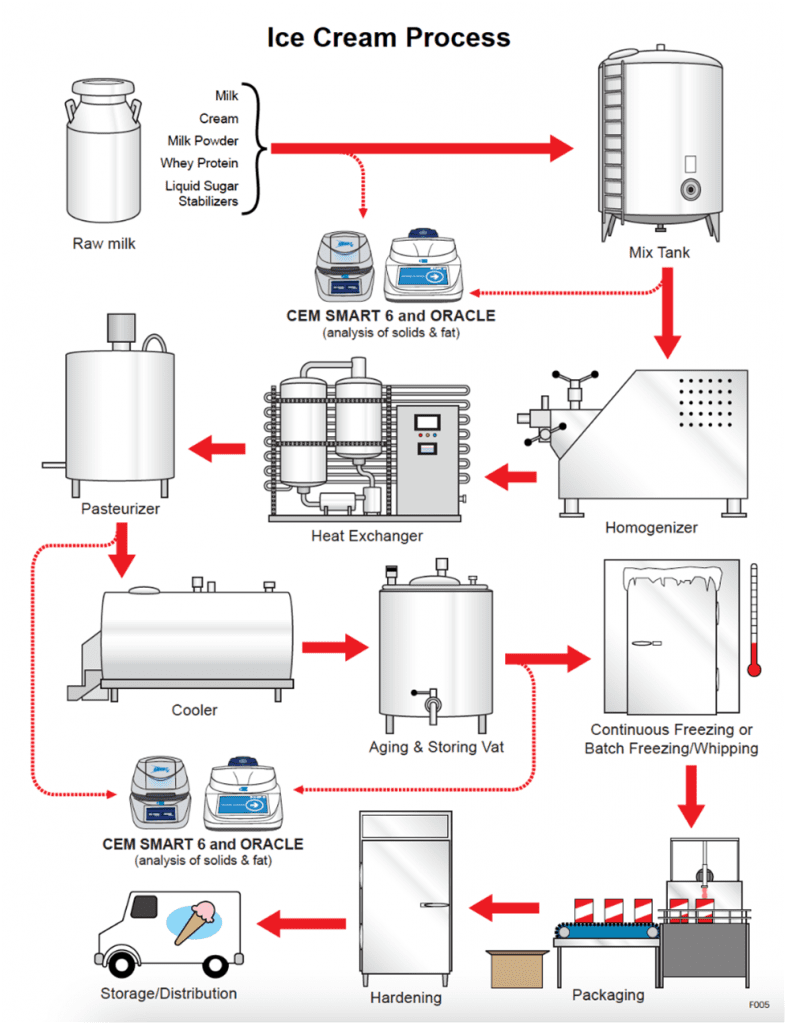
Production begins with ingredient handling. Milk solids, fats, sugars, stabilizers, and flavor bases are measured according to formulation requirements. Accuracy here directly affects mouthfeel and shelf life.
Dry and liquid components are blended in jacketed tanks under controlled agitation. Modern setups use automated dosing systems to reduce human error. Water quality, ingredient traceability, and sanitation protocols are closely monitored at this stage, as early deviations can compromise downstream efficiency and product safety.
Pasteurization & Homogenization
Once blended, the mix undergoes heat treatment to eliminate harmful microorganisms. Pasteurization parameters—temperature and holding time—are selected to meet regulatory norms while preserving flavor integrity.
After heat treatment, homogenization reduces fat globule size through high-pressure valves. This step improves emulsion stability and contributes to a smoother texture. In an industrial ice cream plant, these operations are often integrated into continuous systems, enabling steady flow and energy efficiency rather than batch-by-batch handling.
Freezing, Extrusion & Filling Process
The cooled mix then enters continuous freezers, where controlled air incorporation occurs during freezing. This stage determines overrun, which affects density and sensory quality.
Partially frozen product is shaped through extrusion or deposited directly into containers. Fill accuracy, temperature stability, and gentle handling are essential to avoid structural defects. Automation ensures uniform portioning and minimizes product loss during transfer.
By this point, the workflow transitions into what many operators refer to as the ice cream production line, where synchronized equipment maintains rhythm from freezing to final sealing.
Packaging & Cold Storage
Packaging protects the product from contamination, dehydration, and temperature fluctuations. Containers are sealed, coded, and inspected inline to ensure compliance with labeling and traceability standards.
Immediately after packing, items are transferred to hardening tunnels or blast freezers. Rapid temperature reduction locks in structure and prevents ice crystal growth. Finished goods are then stored in cold rooms, awaiting dispatch under controlled logistics conditions.
Machinery Used in Ice Cream Production Line
Modern facilities rely on integrated equipment designed for hygiene, efficiency, and scalability. While configurations vary, typical systems include:
● Mixing and storage tanks with automated dosing and CIP capability
● Heat treatment units combining pasteurization and regeneration
● High-pressure homogenizers for emulsion stability
● Continuous freezers and fillers synchronized for steady output
These machines are selected based on capacity targets, product variety, and energy considerations rather than brand preference alone.
Why Choose Automated Ice Cream Plants
Automation is no longer optional for operations aiming at consistent quality and regulatory compliance. Automated control systems reduce dependency on manual intervention, improve data visibility, and support predictive maintenance.
For investors and operators, the benefits include repeatable output, reduced waste, and easier scaling as demand grows. From an operational standpoint, automation simplifies audits and documentation, which is increasingly important in global supply chains.
In conclusion
Understanding the complete ice cream factory process helps stakeholders make informed decisions about layout, capacity, and technology partners. Companies like Coldtech Engineering focus on engineering solutions that align with these principles—emphasizing reliability, compliance, and long-term operational efficiency rather than short-term gains.